Welcome!
My name is Julian Michel. I am an Assistant Professor of Government at Hong Kong Baptist University. I study Comparative Politics with a focus on the role of subnational governments in (a) resisting democratic backsliding and (b) building state capacity. My work has been published in International Organization and was recognized by APSA’s Michael Wallerstein Award, Deil S. Wright Award, William Anderson Dissertation Award, George C Edwards III Dissertation Award, German Political Science’s Dissertation Award, and MPSA’s Kellogg/Notre Dame Award.
In my book project “The Subnational Roots of Democratic Stability,” I study how winning subnational executive office enables opposition parties to better preserve checks on the national executive. By drawing on novel data on subnational elections in 84 democracies after 1990, I show that subnational control matters for democratic stability. Fundamentally, my results suggest that opposition-led subnational governments have been “bulwarks against executive aggrandizement” rather than, as in the U.S., “laboratories against democracy” (Levitsky and Ziblatt 2018, Grumbach 2022). You can find a summary of the main contribution here.
In a second research agenda, I study how opposition mayors can build state capacity. In co-led field experimental research in collaboration with the mayor of Freetown, Sierra Leone, we show that digital participatory budgeting increases perceptions of government legitimacy. For co-partisans of the mayor it also raises tax compliance. In another component, we provide well-identified evidence on whether taxation induces demands for representation even when democratic institutions are already in place. The tax reform program this research was part of received positive coverage from The Economist, the IMF, VoxDev, and African Arguments.
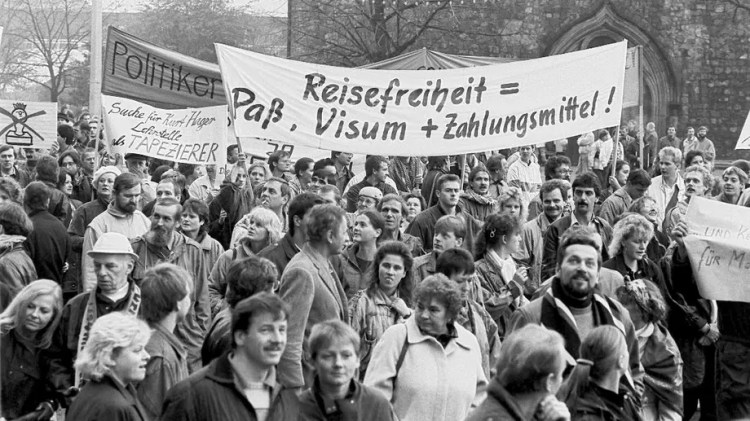
In a third research agenda, my coauthors and I demonstrate how exit opportunities affect domestic pressures for regime change. We employ novel archival data from the German Democratic Republic to understand how dictators strategically approve applications for emigration to manage domestic opposition. Further, leveraging an age-based discontinuity in eligibility for the British National Overseas passport in Hong Kong, we show that eligible citizens are not less likely to engage in contentious politics.
My CV is available here.
Dissertation
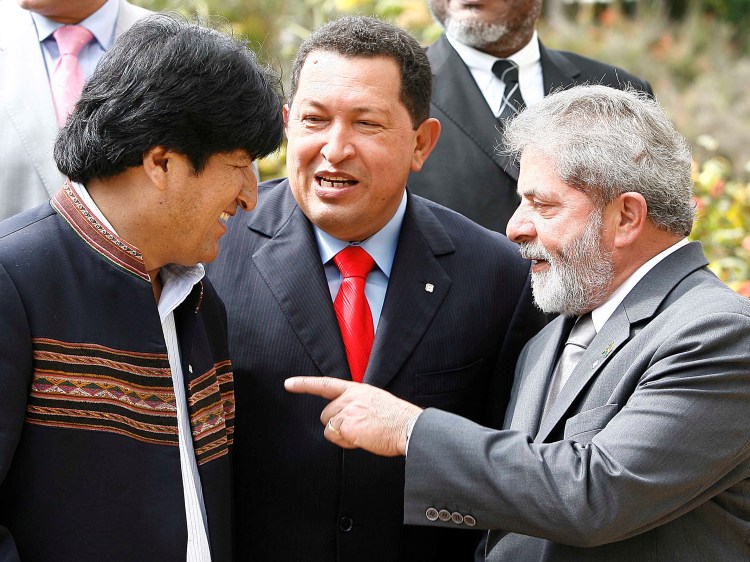
In my book project, I ask: Is aggrandize-ment less likely the more the opposition holds subnational executive office?
 Julian Michel